
This article along with It Doesn’t Have to be this Hard by Victoria Gray and Let Success be Stretchy by Emily Roderick was commissioned to explore artists perspectives of success. Artists at different stages of their career, in different locations and with different lived experiences were selected from an open call to each write an article.
The article’s cover different experiences and share knowledge and advice that may support artists in furthering their understanding of success in the arts.
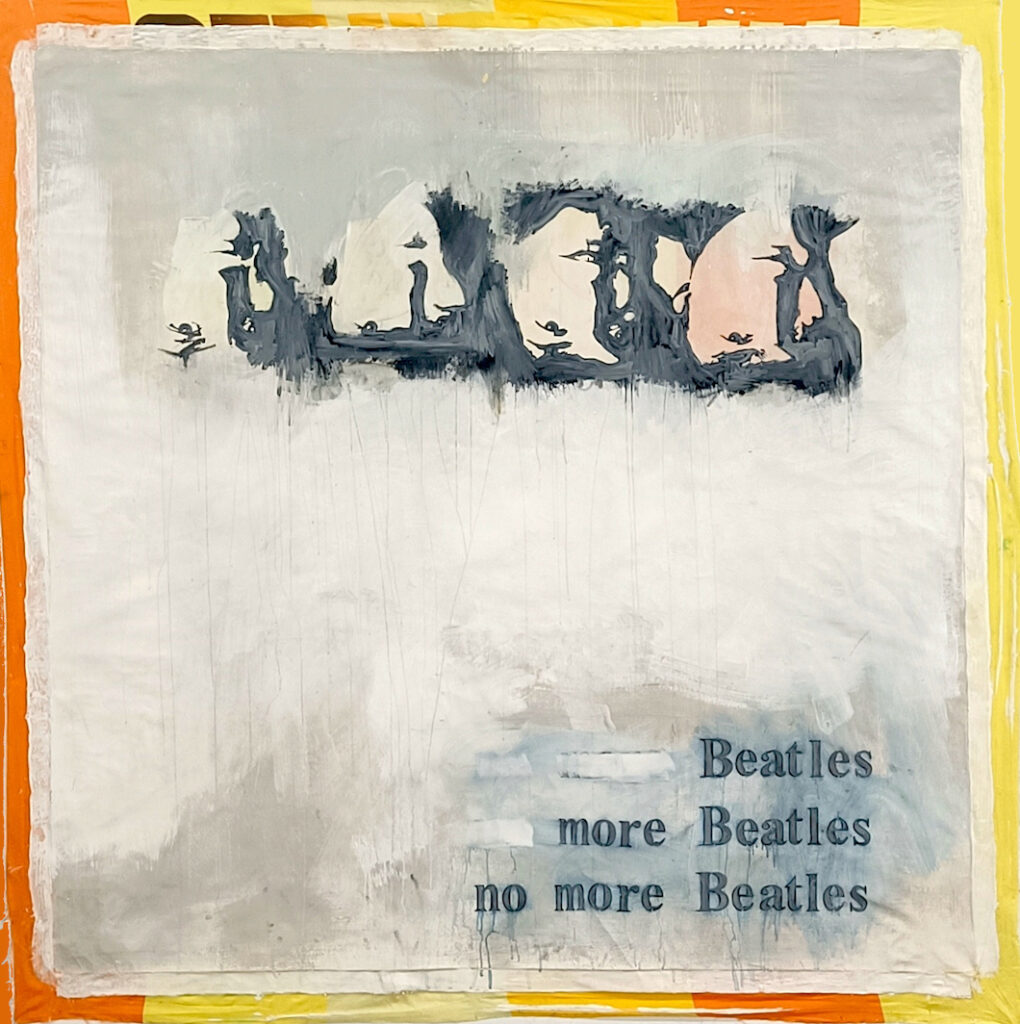
It’s 5:45am when I wake in my rented room off Penny Lane. Holyoake Hall used to be a ballroom where the Beatles performed, it’s divided into modest flats now but the façade still suggests prosperity. I made a painting containing the words ‘NO MORE BEATLES’, people assumed that I disliked the group. What I actually dislike is the gentrification of culture and the dismantling of the conditions that allowed the Beatles to succeed.
That post-war arrangement has been deposed by the pure market logic of neoliberalism, which dictates that success for a few is underpinned by the structural failure of the majority. It’s harder now to imagine a route from council house to the centre of culture, NO MORE BEATLES was less a complaint about the past than a warning for the future.
I walk an hour in the dark before the city stirs. Past Toxteth Cemetery then across wasteland where the cobbles of a ghost road lead nowhere, layered histories where the past rubs up against contemporary reality. I’m witness to the demolition of the Royal Liverpool University Hospital, civic infrastructure once symbolic of social progress now reduced to ruins, utopian possibility collapsed into dust.
At the Infirmary a blue plaque indicates where Robert Noonan died, as Robert Tressell he wrote The Ragged-Trousered Philanthropists. Never experiencing success in his lifetime, he died unknown and consigned to a pauper’s grave, his story still haunts, invoking Stephen Jay Gould’s belief that for every Albert Einstein there was “the near certainty that people of equal talent have lived and died in cotton fields and sweatshops”.
The people who work during these early hours sound like me. Later, inside, accents change as the staff and students fill the spaces that I maintain, they don’t notice who keeps things running. Different accents, different backgrounds, different expectations. I work in the background so that others can get on with what they came here to do, while I’m here doing something that isn’t my vocation.
Maintenance work is draining. Fixing, replacing, unblocking, resetting, monitoring. Walking endless corridors, I’m always moving yet rarely seen. Unlike the art world, here invisibility is a measure of success. The more unseen you are, the better you’re doing the job. Invisibility becomes its own artistry.
Lecture theatres, labs, studios, offices. Spaces built for thinking, experimenting, becoming someone. I’m here so that these spaces can operate, but I’m not who they’re intended for because I am not becoming someone. Although I might be becoming someone else and I want to be elsewhere, so I let my mind drift to my other life. The thrum of motors and the geometry of pipes become mental notes for future ArtWorks.
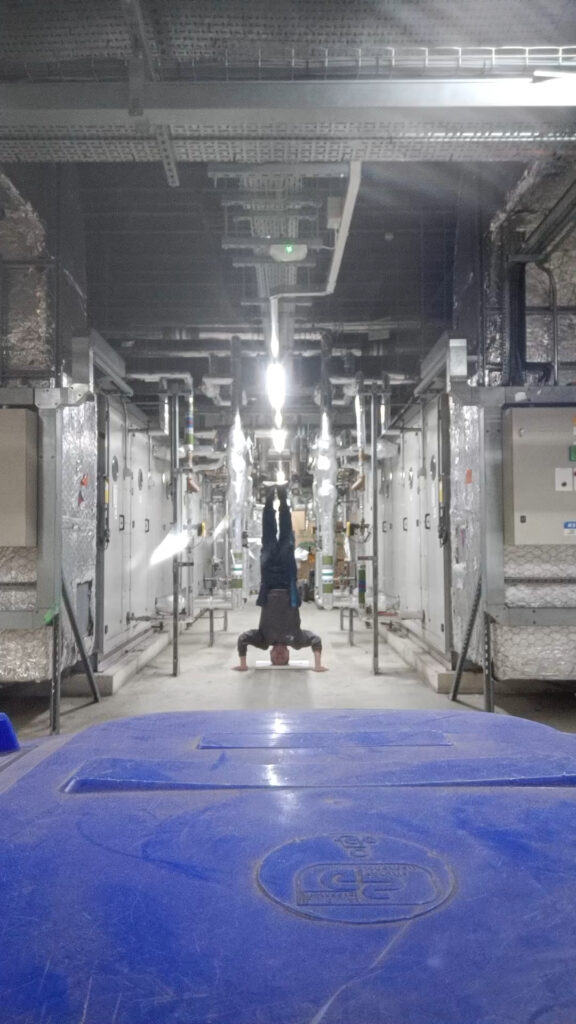
I make videos on my phone when no one is around. Cutting My Fingernails On Work’s Time (7:11), Meditating On Work’s Time (10:59), Maintaining A Headstand On Work’s Time (1:34). Acts of resistance to smuggle creativity through the cracks of paid labour. My actions are the liberation of productive time slipped between the tasks. This is the closest I get to being an artist during the day.
I’ve walked miles before noon, and my boots have holes in the soles that let in the rain. Another four hours until this ends but I know that the day isn’t over. The second shift, the real one, still waits for me across the city.
My legs feel heavy but at least it’s downhill, toward the river. The sun setting over the docks, in the direction I’m heading, means that I’m walking into the light. After a day spent windowless in basements, loading bays and boiler rooms this matters and my walk carries purpose. Today was obligation, a trudge to someone else’s timetable but now the evening is mine, autonomy re-established.
I pass the Metropolitan Cathedral; a concrete crown built from stoic ambition upon the foundations of unrealised dreams. It reminds me that something meaningful can still emerge and give rise to something vital, even when the original plan has to be adapted. Through the portal of the paifang into Chinatown. I walk through this gateway, never around, to make it feel like a deliberate crossing. A small ritual to leave behind the part of me that belongs to someone else and step toward the part that still believes useful work. can mean something other than the labour of survival.
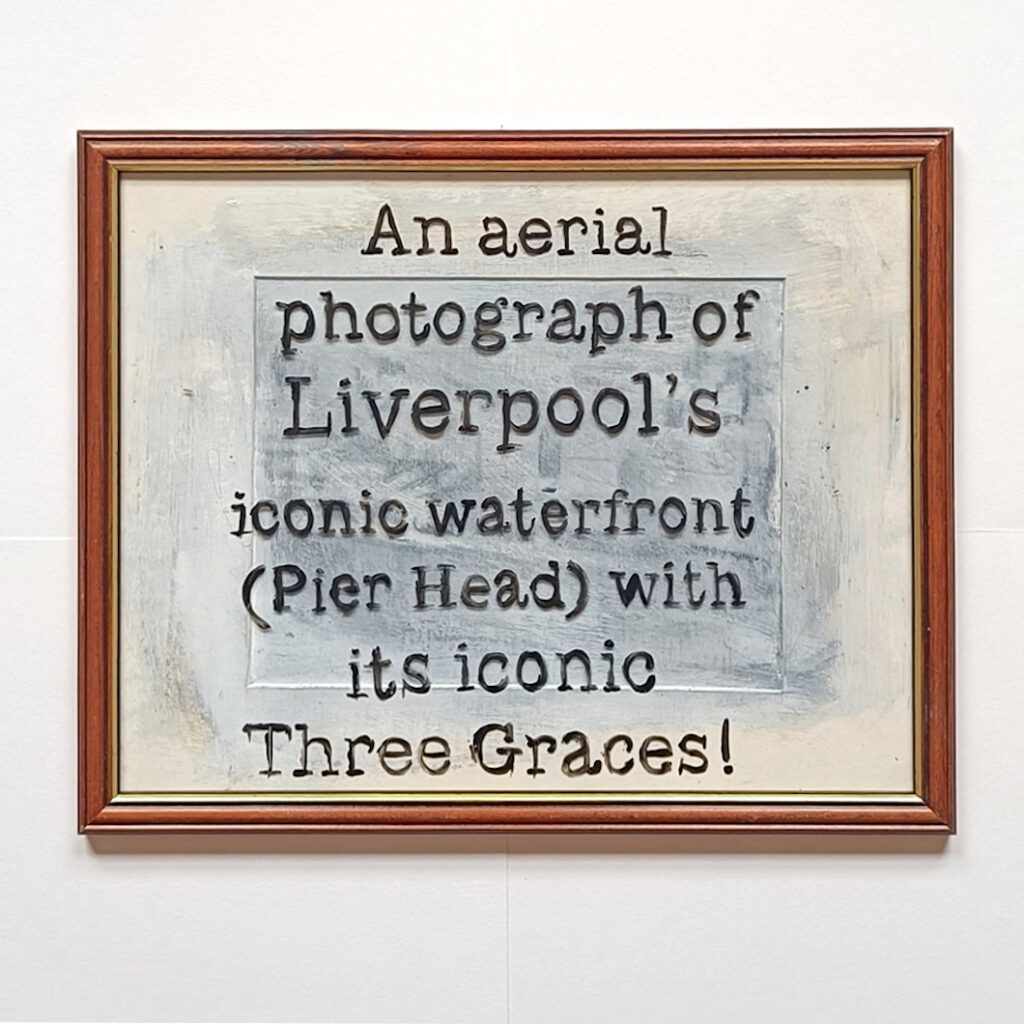
Then into the Baltic Triangle which used to consist of abandoned warehouses and mechanics’ workshops, it’s now a mix of bars and spaces for creativity. I’m aware that I’m part of a cycle of renewal that veers close to gentrification, but it’s better than the previous violence of dereliction inflicted by “managed decline”. The city is making room, however imperfectly, for people trying to make things happen.
I’m tired but this part of the day that belongs to me, the studio doesn’t make me visible, but it does make things possible. Here, I’m part of the creative energy and often radical approaches born of necessity in cash-strapped regions. This substructure of cultural production is a long way from the polished framework of the superstructure that it supports. Gregory Sholette uses the term “dark matter” to describe the invisible cultural labour that sustains the visible art world. The institutions and artists celebrated as successful depend upon what they overshadow, those unacknowledged practices and lives that reproduce the system.
The Overton Window maps political acceptability along a horizontal axis from left to right. Imagine a similar window charting cultural possibility vertically, from failure at the bottom to success at the top. Under neoliberalism this window has narrowed and descended, restricting success and producing a surplus of failure. In exposing these conditions, we must acknowledge the predictable results of already existing advantage and the structural bias that now make artistic sustainability a privilege rather than a possibility.
Against this backdrop, I don’t recall holding a clear or conventional idea of success when I left art school. Possessed by a bohemian spirit and more interested in experience than a career, art was a way of avoiding, or at least holding off, the banal inevitability of a ‘real job’. Success meant little more than covering rent and bills while continuing to paint. What has shifted is not so much my idea of success, but the art world’s.
As culture has been gentrified, a middle-class logic of careerism has taken root, treating art as a professional pathway rather than a form of resistance or refusal, reshaping art schools into sites of career formation rather than spaces for radical encounter.
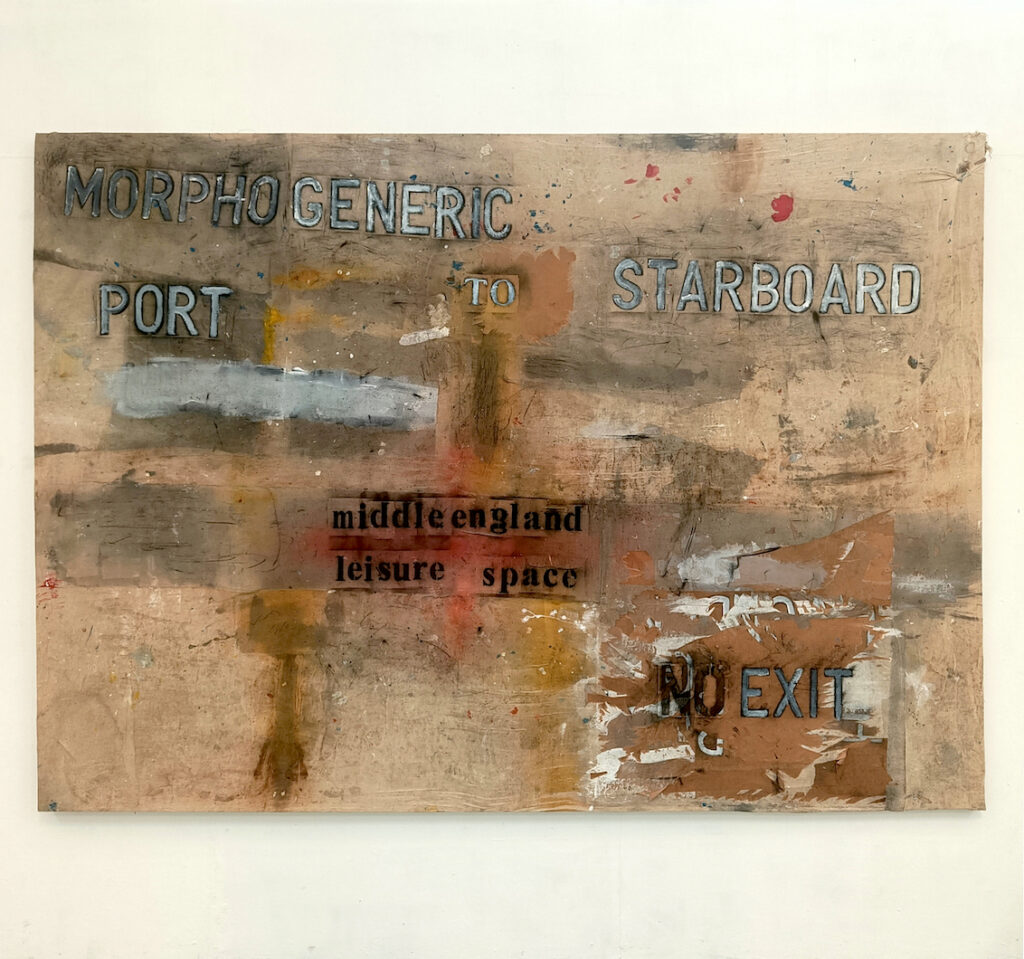
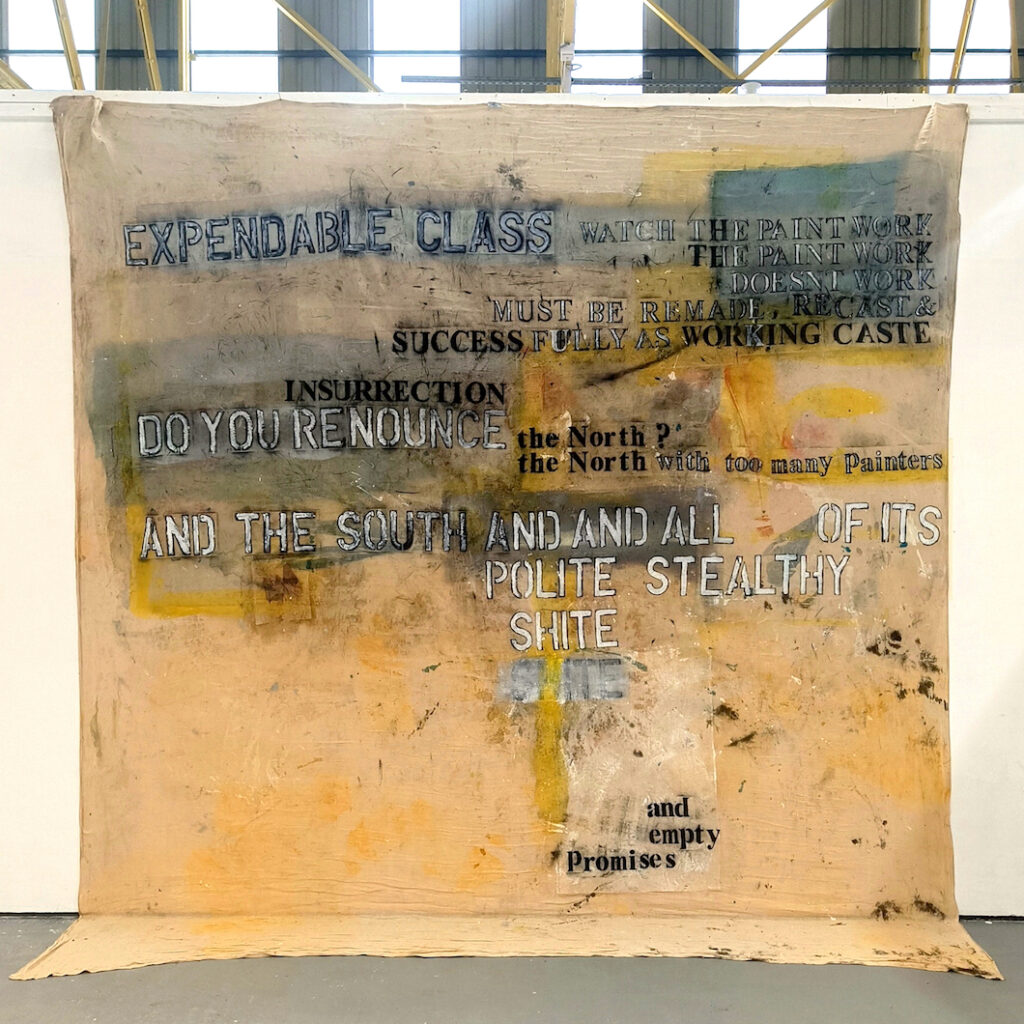
detritus on cotton twill (builder’s dust sheet) – 200 x 280 cm, Karl Kolley
Instead, artists equipped with the economic and cultural capital to navigate these systems feed more readily into curatorial, institutional and collector frameworks, entering professional networks with relative ease. Amid this professionalisation, the dissident tendencies that once marked artistic life recede, and the social distinction of the artist gradually diminishes.
I know what it means to work in the shadows, where most of contemporary culture’s labour happens. Measuring artistic success by someone else’s standard has become irrelevant. Art is not a competition, and I’ve learned to measure my success through endurance, by sustaining a practice when the system is designed to prevent it. And so, I continue; refusing to disappear, refusing to surrender, refusing to cede further ground to the more privileged.
Karl Kolley is an artist and writer from the North of England, foregrounding endurance and the economics of survival as artistic method. His work often emerges within the conditions of labour with particular focus on the uses of time. Grounded in autoethnographic research, it traces how creative practices are sustained under structural constraint. He collaborates with Barbara K. Nigro as part of an ongoing partnership exploring working-class knowledge production, collective authorship and alternative cultural infrastructures.